


Why Knowledge, Maintenance and Training Matter More Than Ever
Carbon monoxide (CO) remains one of the most serious safety risks facing UK campervan and motorhome owners. It is colourless, odourless and tasteless — and in an enclosed vehicle, it can reach dangerous levels far more quickly than in a typical house.
Across the UK, hundreds of lives have been lost over the past decades due to unintentional carbon monoxide exposure in enclosed spaces. While most incidents occur in domestic settings, leisure vehicles present unique risk factors:
- Smaller interior volume
- Multiple fuel-burning appliances
- Overnight occupancy while sleeping
- DIY conversions without formal safety oversight
- Aftermarket electrical upgrades affecting airflow or appliance performance
For full-time vanlifers and seasonal tourers alike, understanding how carbon monoxide forms — and how electrical systems interact with combustion appliances — is critical to staying safe.
Why Carbon Monoxide Is So Dangerous
Carbon monoxide is produced when fuels such as LPG, diesel, petrol or wood burn incompletely.
When inhaled, CO binds to haemoglobin approximately 200 times more readily than oxygen, preventing oxygen delivery to vital organs. Early symptoms can resemble fatigue or flu:
- Headache
- Dizziness
- Nausea
- Confusion
- Chest tightness
Because symptoms can escalate quickly — and because sleeping occupants may not wake — CO exposure in campervans and motorhomes can become life-threatening without warning.
Common Sources of CO in Campervans & Motorhomes
UK leisure vehicles commonly include multiple combustion systems:
- LPG cookers, heaters and absorption fridges
- Diesel air heaters
- Engine exhaust during idling
- Portable petrol or diesel generators
- Solid fuel stoves in custom builds
CO risk increases when:
- Flues are blocked or poorly routed.
- Exhaust seals fail
- Appliances are incorrectly installed
- Ventilation is restricted
- Electrical systems malfunction and affect combustion airflow
This final point is often overlooked.
The Overlooked Link: Electrical Systems & CO Safety
Modern heaters and fridges rely heavily on stable electrical supply for the following:
- Combustion fans
- Control boards
- Ignition systems
- Safety shut-off monitoring
If voltage drops, wiring is undersized, grounds are poor, or modifications obstruct airflow, combustion efficiency can suffer—increasing the risk of incomplete burn and carbon monoxide production.
Common issues seen in UK self-build conversions include:
- Diesel heaters wired directly to inadequate circuits
- Battery upgrades blocking ventilation paths
- Inverters installed without airflow consideration
- Poor earthing causing intermittent heater faults
- CO alarms connected to unreliable power sources
Electrical safety and combustion safety are inseparable in modern campervan systems.
Essential CO Safety Measures for UK Owners
Every campervan or motorhome should have:
✔ A BS EN 50291-2 compliant CO detector
Designed specifically for caravans and motorhomes.
- Install near sleeping areas at breathing height
- Test monthly
- Replace every 5–7 years
- Never ignore an alarm
✔ Permanent ventilation kept clear
Never block low- or high-level vents, even in winter.
✔ Annual appliance servicing
Gas systems and diesel heaters should be checked by qualified professionals.
✔ Visual checks before every trip
Inspect flues, exhaust routing, gas lockers and vents.
From Awareness to Action: Why Training Makes the Difference
Knowing that carbon monoxide is dangerous is one thing.
Understanding how your specific electrical system, heater wiring, battery configuration and ventilation layout interact is something else entirely.
Many safety failures occur not because owners are careless but because they were never shown how their systems actually work.
That is where structured, safety-focused education becomes invaluable.
Electrical & Safety Workshops by Electrimech Power Services Ltd
Electrimech specialises in auto electrical systems for campervans and motorhomes and runs practical workshops designed specifically for leisure vehicle owners.
Rather than simply carrying out repairs, their workshops focus on helping owners understand:
- How 12V systems operate safely
- Correct wiring practices
- Common installation mistakes
- Safe heater wiring and battery configuration
- Preparing vehicles for habitation inspections
- Fault-finding basics
- How electrical issues can impact appliance safety
This safety-first approach is particularly valuable for:
- Self-build converters
- Owners upgrading to lithium systems
- Anyone installing diesel heaters
- Those adding solar, inverters or extra batteries
- Owners unsure about previous electrical work
By understanding your system properly, you reduce the risk of:
- Heater malfunction
- Poor combustion
- Electrical fires
- Failed safety devices
- Inadequate ventilation caused by modifications
Workshops are practical, accessible, and designed for real-world use — not just theory.
Why Attending a Workshop Is a Smart Safety Investment
- Prevention is cheaper than repair.
Identifying unsafe wiring or poor installation early prevents dangerous failures. - Confidence when modifying your van
Many CO risks arise after upgrades. Learning safe practices protects future projects. - Better communication with professionals
Understanding terminology helps you ask the right questions during servicing. - Improved overall habitation safety
Electrical knowledge supports safer gas, heating and ventilation systems. - Peace of mind while touring
Knowing your system inside-out reduces anxiety — especially during winter trips.
Electrimech Contact Details
For workshop information, bookings, or safety advice:
Website: https://www.electrimech.co.uk
Contact: 07720869711
Address: 65 Spyvee Street ,Hull, HU8 7JJ
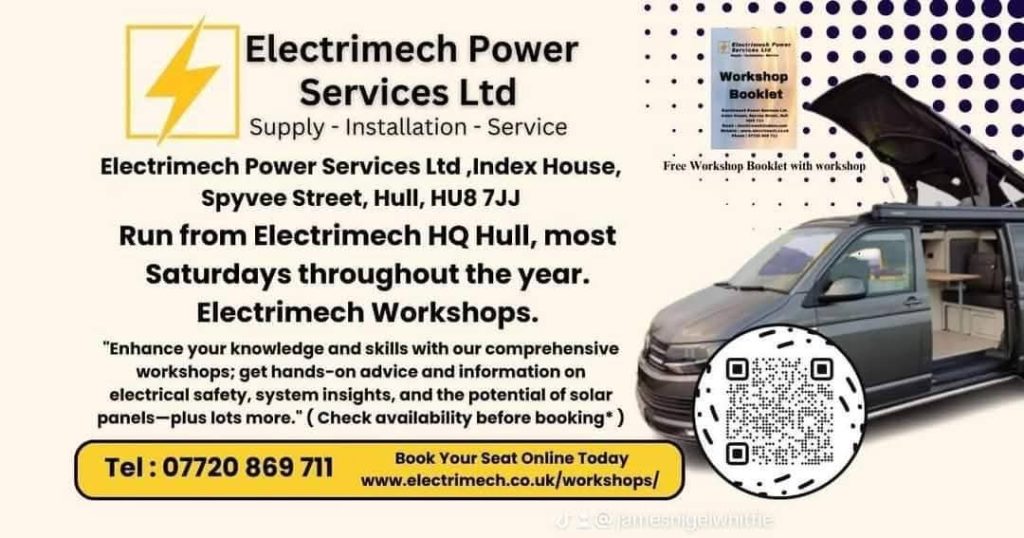
If you are planning electrical upgrades, experiencing heater faults, or simply want to understand your campervan’s systems better, reaching out before problems arise is always safer than reacting afterwards.
Final Thoughts
Carbon monoxide is silent but preventable.
For UK campervan and motorhome owners, safety depends on:
- Proper ventilation
- Maintained combustion appliances
- Reliable electrical systems
- Working CO detection
- Ongoing education
A detector alone is not enough. Real safety comes from understanding how every system in your vehicle interacts.
Whether you use your van occasionally or live in it full-time, investing time in learning — through professional servicing and structured workshops — is one of the most effective ways to protect yourself and your passengers.
If you’d like, I can also create the following:
- A UK campervan CO safety checklist
- A pre-trip inspection guide
- A workshop promotional version formatted for web publication
- A version optimised for SEO targeting UK motorhome owners

